

Insights
Understanding and Managing Pennsylvania Inheritance Tax
When a person dies as a resident of Pennsylvania, Pennsylvania Inheritance tax is owed on most categories of the assets they owned at their death. Understanding both how the tax is calculated and the exempt asset categories is key to managing the Inheritance tax that will be owed by one’s estate.
CLIENT ALERT: Proposed IRS Rule Change Threatens 501(c)(3) Status for Many Independent Schools
The IRS wants to change the tax status of thousands of independent schools. We're sharing our thoughts on how best to respond.
Pete talks with Amanda Riegel (Excelle Women In Leadership) - Episode #3
The series features candid conversations between Excelle Founder & CEO Amanda Riegel and Peter T. Commons of Commons & Commons LLP, a trusted advisor who has negotiated hundreds of head of school contracts and counseled leaders through complex topics such as school transitions and crisis response.
Episode#3 - How and when to use an attorney: In our third and final “TeachHer” conversation, Excelle CEO/Founder Amanda Riegel sits down with Peter T. Commons of Commons & Commons LLP to talk about something most school leaders discuss nearly enough – how to think about legal counsel before you actually need it.
Pete talks with Amanda Riegel (Excelle Women In Leadership) - Episode #2
The series features candid conversations between Excelle Founder & CEO Amanda Riegel and Peter T. Commons of Commons & Commons LLP, a trusted advisor who has negotiated hundreds of head of school contracts and counseled leaders through complex topics such as school transitions and crisis response.
Episode#2 - Career Transitions: In this conversation, Amanda Riegel and Pete Commons discuss the complexities of transitioning heads of school, focusing on the emotional and legal aspects of career changes in educational leadership. They explore the importance of communication, the need for legal advice, and the human dynamics involved in these transitions. The discussion emphasizes the significance of establishing strong relationships between heads of school and their boards, as well as the necessity of preparing for potential challenges in governance and contract negotiations.

The Estate Planning Meeting - What to Expect
In this episode, estate planning attorneys Mary Beth Melso, Sierra Weinkam, and Christina Miller (https://www.commonslaw.com/lawyers) demystify the estate planning process. They cover essential documents, what to expect in a meeting, and how clients can prepare effectively. Keywords Estate Planning, Wills, Power of Attorney, Healthcare Directive, Probate, Fiduciary Roles, Estate Meeting Preparation Topic areas Key estate planning documents: will, healthcare directive, power of attorney What to expect during an estate planning meeting How to prepare and what to bring to your estate planning session Differences between probate and non-probate assets Roles of executor, trustee, and guardian Takeaways Most estate plans include a will, healthcare directive, and power of attorney. Preparation involves reviewing assets, liabilities, and thinking about beneficiaries. Clients can bring documents or contact info, but it's not necessary as notes are taken. Estate planning meetings are designed to be informative and supportive.

All About Donor Advised Funds
Charitable giving is something many people think about when establishing or updating their estate plan. One tool that has become increasingly popular is a Donor Advised Fund, commonly known as a DAF. Despite their growing use, many people are unfamiliar with how they work or whether a DAF might make sense for them for lifetime charitable giving and as part of their estate plan.

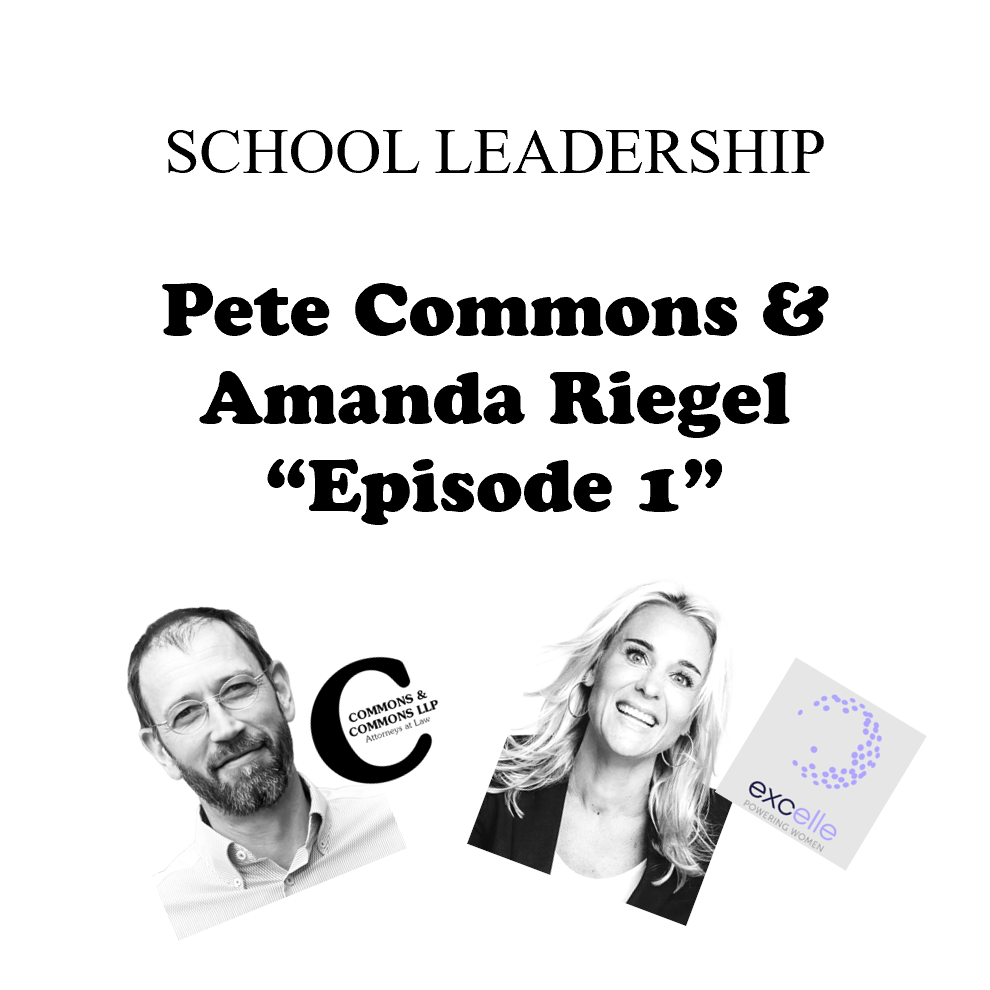
Pete talks with Amanda Riegel (Excelle Women In Leadership) - Episode #1
The series features candid conversations between Excelle Founder & CEO Amanda Riegel and Peter T. Commons of Commons & Commons LLP, a trusted advisor who has negotiated hundreds of head of school contracts and counseled leaders through complex topics such as school transitions and crisis response.
EPISODE #1: Contract Negotiations – Compensation, timing, and terms including what boards can offer beyond salary when budgets are tight.

Can a Buyer Terminate the Standard Pennsylvania Buyer Agency Contract? Understanding the Limits of the PAR Exclusive Buyer Agency Agreement
The Pennsylvania Association of Realtors® (“PAR”) Exclusive Buyer Agency Contract is one of the most widely used forms governing the relationship between homebuyers and their real estate agents, but is notably sparse when it comes to termination rights. This article explores the circumstances under which a buyer may terminate the contract.
When to Review Independent School Bylaws (video clip)
Every nonprofit corporation is required to have bylaws - and those bylaws set the rules for how the organization is governed at a high level. In this video, Karen Wolfe explains why bylaws are the foundation of a board’s governance work, why board members should actually know what their bylaws say, and why bylaws should be treated as a living document and reviewed regularly.

Attorney-Client Privilege for Independent School Leaders (video clip)
Attorney-client privilege is often misunderstood - and small mistakes can easily waive it. In this video, Joe Pecora explains what attorney-client privilege actually protects, when it applies, and when it does not.
Joe Pecora, a Partner at Commons & Commons LLP, walks through common pitfalls, including why simply copying an attorney on an email or labeling a communication “confidential” does not make it privileged, how privilege can be lost by including the wrong people on emails or calls, and why privilege does not extend to all employees. He also discusses the limits of privilege for personal matters, the obligation of school counsel to act in the organization’s best interests, and when board members or heads of school should consider seeking independent legal advice.
Bylaws & Handbooks - Independent School Policy Documents (video clip)
Policy documents are where a school’s governance actually takes shape. While bylaws establish the high-level structure of boards and committees, the real detail about how a school operates lives in its policies.
In this video, Karen Wolfe, partner at Commons & Commons LLP, explains how four core documents - the bylaws, the board handbook, the parent and student handbook, and the employee handbook - translate a school’s mission, vision, and nonprofit purpose into day-to-day practice, and why those policies must reflect both what is happening at the school and the values on which it was founded.
Independent School Insurance and Liability Issues (video clip)
Insurance plays a critical role in protecting schools, their leadership, and their employees from significant legal and financial risk. In this video, Joe Pecora explains why insurance is essential for schools - not only to manage liability exposure, but also to meet indemnification obligations owed to directors, officers, and employees under law, bylaws, and employment contracts.
Joe Pecora, a Partner at Commons & Commons LLP, walks through the core types of insurance coverage schools should understand, including general liability, workers’ compensation, property, and auto insurance, as well as school-specific coverages such as directors and officers insurance, employment practices liability, sexual misconduct and molestation coverage, and cyber insurance. He also explains why gaps in coverage, policy limits, or lapses in insurance can create serious exposure - and why schools should regularly review their coverage with a knowledgeable insurance broker to ensure they are properly protected.
How to Organize Information and Documentation for Estate Administration in Pennsylvania: A Timeline for Personal Representatives
For those serving as the personal representative of an estate, determining what documentation and information to keep and organize can be confusing. Based on our experience working with Executors and Administrators in Philadelphia and the surrounding counties, we put together a list of documents and information that we recommend you gather and keep.
When to call the school’s attorney - a checklist for heads of school and school administrators (video clip)
In this conversation, Pete Commons and Joe Pecora of Commons & Commons LLP discuss the intersection of legal issues and school administration. They emphasize the importance of recognizing when a school issue may escalate into a legal matter, particularly when lawyers are involved. Pete outlines various scenarios that necessitate the involvement of school counsel, including employment terminations, student dismissals, and allegations of discrimination. Joe also highlights the significance of indemnification and liability insurance in protecting school administrators during legal disputes.

Avoid this costly mistake - what NOT to do before calling the school’s counsel (video clip)
One of the most common, and costly, mistakes schools make in employment matters is calling their lawyer after a termination has already happened. In this clip, we explain why that sequence is backwards. The right approach is to consult counsel before taking action, so the termination can be handled in the lowest-risk way possible. Just as important, schools should have an established relationship with their attorney before an emergency arises, not scramble to find one after the fact.
Navigating School Mergers: What Every Independent School Leader Should Know
Considering a school merger? This blog post outlines key risks, opportunities, and a downloadable due diligence checklist for independent school leaders, board members or trustees, and advisors exploring mergers or acquisitions.